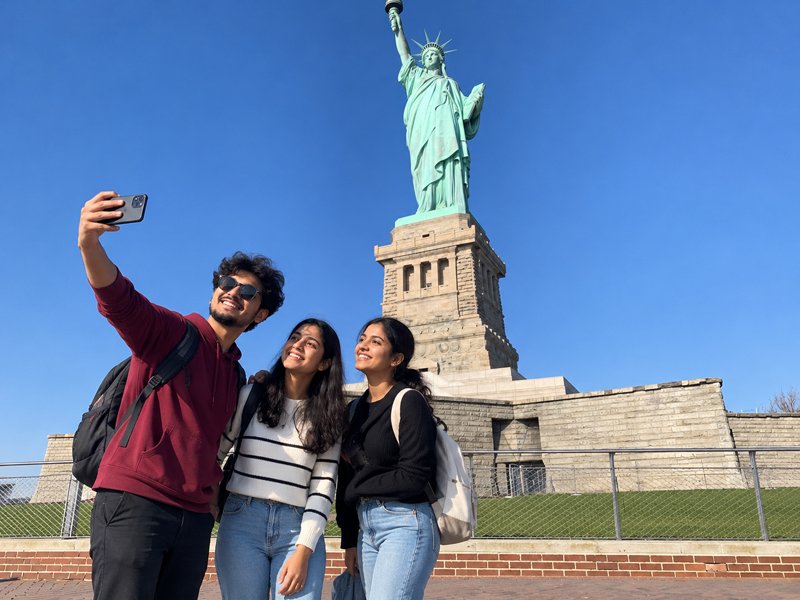
Alex Thomas is heading to the University of Maryland, Baltimore County, for a Master of Science in Artificial Intelligence.
“With US higher education in such uncertain times, people kept distracting me. But for me, I wanted to pursue my master's in the US itself – it’s something that I had in my mind for a while. Now, I feel on top of the world!” Says a beaming Alex.
When he first came to us, the question wasn't "which US university is the most famous." It was closer to: which programme fits what I want to do, and can I afford to get it right the first time? That second question matters more this year than it did last year, because the US changed one of its rules in a way that makes a wrong first choice harder to fix.
The Rule That Changed in September
Until now, most international students in the US were admitted under "duration of status": you could stay as long as you were enrolled and in good standing, with no fixed end date. A rule that DHS published in July 2026 replaces that for new F-1 students. From 15 September 2026, students are admitted for the length of their programme, up to a maximum of four years, plus a 30-day grace period. Previously, the grace period after finishing was 60 days.
The practical consequences are worth reading slowly:
- Extensions need a separate filing. A student who needs more time, whether to extend a programme, transfer, or start OPT, generally must apply to USCIS for an extension of stay.
- OPT has not been scrapped. Post-study work authorisation is still there. What has changed is that many students will need a second approval alongside the work permit, so timing matters more than before. There are transitional protections for students already in the US, and travel can affect them, so a student who is already studying should speak to their university's international office.
- Changing course is harder. Graduate students are generally not allowed to switch programmes or majors, and a student who finishes one degree level generally can't enrol in another at the same or a lower level.
Rules like these were challenged in the past and can change again, so check the current position with your counsellor at IRS Study Abroad. The point is simpler than the detail: the US has become less forgiving of a first choice made in a hurry.
Why a Public University Like UMBC Makes Sense
A student looking at the US usually starts with a list of famous names. But the country has hundreds of strong research universities, and many of the best value sit among the public ones.
UMBC is a good example. It's a public research university just outside Baltimore, and its MS in Artificial Intelligence is a structured programme: 33 credits for the non-thesis route, or 24 credits plus a 6-credit thesis, with core courses in the principles of AI and machine learning (a B or better is required in each), and electives such as computer vision, natural language processing, neural networks and robotics. The GRE isn't required. Applicants submit a statement of purpose, two recommendations, transcripts, and an English proficiency test if their degree wasn't taught in English. International applicants for the fall term apply by 20 January, and the spring deadline is 1 June.
That is the kind of detail that should decide a choice: what is the programme made of, who teaches it, and do the next two years make sense for this student's background.
What It Costs, Honestly
A US master's is expensive, and the tuition is only part of it. UMBC's own estimate for a full-time out-of-state graduate student is in the region of $60,000 a year once housing, food, books, transport and other costs are counted, although the university notes these figures are estimates and change from year to year, so check the current page before you plan. Your I-20 and visa application will need funds shown for the full first year, and we'd rather families see the real number at the start than discover it at the visa stage. Our education loan guide explains how families usually fund this.
What We'd Tell Any Family Weighing the USA
Choose the course before the university. Under the new rules, switching later is harder, so the first choice carries more weight. Plan the money for the whole programme, not just the first semester. And treat the post-study work route as something to plan for from the first day of the course, not something to sort out in the final month.
A Note from IRS Study Abroad, Kottayam
We work with US universities including UMBC, and more US partners will be joining us soon. We don't promise visa outcomes, because no one honestly can. What we do is build each application around the student: the course matched to their background, the finances matched to the course, and a Statement of Purpose written by the student from their own story, never adapted from a template. If you're weighing the USA, we'd rather work through the course and the rules with you early than help you recover from a rushed first choice.
Frequently Asked Questions
What is the new F-1 rule for international students in the USA?
A DHS rule effective 15 September 2026 replaces "duration of status" with a fixed admission period tied to the length of your programme, up to four years, plus a 30-day grace period. Extensions, transfers and OPT may need a separate filing with USCIS. Check the current rule with your university's international office before you apply.
Is OPT still available after the rule change?
Yes. OPT and STEM OPT have not been eliminated, but many students will need an additional approval to extend their stay, so timing and paperwork matter more.
Can I change my course after I arrive in the USA?
Graduate students are generally not allowed to change programmes or majors under the new rules, and moving to a same-level or lower-level programme after finishing a degree is generally not allowed. That is why choosing the right course first matters.
What does the MS in Artificial Intelligence at UMBC involve?
It's a 33-credit non-thesis programme, or 24 credits plus a 6-credit thesis, built around core courses in AI and machine learning with electives such as computer vision, NLP, neural networks and robotics. The GRE isn't required. Fall applications from international students close on 20 January.
How much does it cost to study in the US for a master's degree?
It varies a lot by university and city. UMBC's own estimate for a full-time out-of-state graduate student is around $60,000 a year, including living costs. Check the university's current figures when you apply.
📞 +91 96561 21000
📍 IRS Study Abroad, 3rd Floor, Vettiyil Endow, Opp. Pvt Bus Stand, Nagampadom, Kottayam
🌐 Start Your Study Abroad Journey: https://join.irsstudyabroad.com/