Slovenia
Slovenia is one of the smaller, quieter corners of the EU study map — which is exactly why it's worth a proper look rather than a passing mention. It's a genuinely safe, well-run EU member state with a real cost advantage over Western Europe, an unusual and student-friendly subsidised meal system most countries don't offer, and a workable path into European higher education through our partner institution, ERUDIO Business School in Ljubljana. This page is built on Slovenia's own official study-abroad resources, cross-checked against the EU's own country profile, so the figures here should hold up to scrutiny.
Our Partner Institution: ERUDIO Business School, Ljubljana
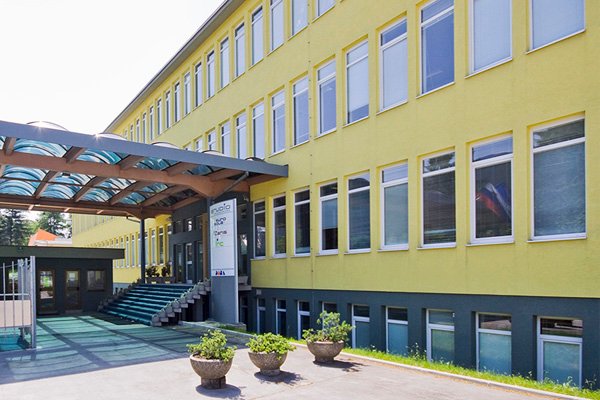
IRS Study Abroad currently partners with ERUDIO Business School, part of the ERUDIO Education Group, a private Slovenian institution established in 1993 and based in Ljubljana. ERUDIO offers an EU-recognised Bachelor's programme in International Business and Entrepreneurship, alongside vocational college and other business-focused study tracks. It's a smaller, practice-oriented institution rather than one of Slovenia's large public research universities — worth being upfront about, since the two are genuinely different experiences: ERUDIO focuses on a personalised, practically-oriented approach with smaller class sizes, not large lecture-hall academics. We'll be adding more Slovenian partner institutions to this listing over time.
Be Clear on the Language and Cost Situation Before You Apply
Two things worth stating plainly, the way we do on every country page here:
Free tuition in Slovenia is not universal. It applies to EU/EEA citizens and to students from a specific set of Western Balkan countries (Bosnia and Herzegovina, Montenegro, Kosovo, North Macedonia, and Serbia). Indian students do not fall into either category, so tuition fees do apply — the ranges below are what to actually expect.
Most Slovenian public-university teaching is in Slovenian. English-taught options do exist and are growing, particularly at postgraduate level and at private institutions like ERUDIO, but this isn't a country where English is the default medium everywhere the way it is in, say, the Netherlands.
Quick Facts About Slovenia
Capital: Ljubljana
Official Language: Slovenian (English-taught programmes available, particularly through private institutions and postgraduate study)
Currency: Euro (€)
Main Intakes: Typically October, with some institutions also offering a February intake
Popular Student Cities: Ljubljana, Maribor, Koper (Primorska), Nova Gorica
Known For: A safe, forested, and genuinely affordable EU country with strong Erasmus+ and CEEPUS exchange links
Cost of Education
Tuition depends heavily on institution and programme, and — as with every country page here — treat the figures below as an orientation point, confirmed against the specific programme before applying:
Bachelor's programmes: typically €2,000–€11,000 per year, depending on the institution.
Master's programmes: typically €2,000–€15,000 per year.
Doctoral programmes: typically €2,000–€6,000 per year.
These ranges come from Slovenia's own official study-abroad resource and are corroborated independently by the European Commission's country profile for Slovenia — the two line up closely, which gives more confidence in the figures than a single-source claim would.
Cost of Living
Slovenia is genuinely one of the more affordable EU countries to live in as a student:
General living costs are estimated at roughly €400–800 per month, covering accommodation, food, transport, and personal expenses.
Student dormitory rooms range from around €100–250 per month depending on city, with Ljubljana at the higher end and Maribor typically cheaper.
Slovenia runs a distinctive subsidised student meal system: the government contributes a fixed amount toward each meal at participating restaurants, meaning students often pay only a small top-up — as little as nothing for a sandwich, and rarely more than around €4–5 for a full restaurant meal. It's a genuinely unusual feature that meaningfully lowers day-to-day food costs, and worth mentioning to students weighing this against other destinations.
Working While Studying
Slovenia's part-time work system for students works differently from most European countries. International students register with a licensed employment agency known as a Student Service, which issues a referral contract used to take up part-time work. It's a more structured system than the informal "find your own part-time job" approach common elsewhere, and it comes with its own registration steps (ID, a Slovenian bank account, a tax number, and proof of enrolment), which we'll walk you through as part of your pre-departure preparation.
Student Life
Slovenia's small size is part of its appeal — Ljubljana, Lake Bled, and the Slovenian coast are all within easy reach of each other, and the country sits at a genuine crossroads of Italy, Austria, Croatia, and Hungary, making weekend travel across Central Europe unusually easy. It's consistently ranked among the safer, calmer places to study in Europe, which matters more to some students and families than a big-city environment does.
Who Slovenia Suits
Students interested in International Business and Entrepreneurship specifically, where our ERUDIO partnership offers a direct, practically-oriented route.
Students who want a genuinely affordable EU study experience without the higher living costs of Western Europe.
Students who prioritise a safe, smaller-scale environment over a large-city university experience.
Students comfortable with a more structured, agency-based part-time work system than the UK or Ireland's more informal approach.
Who Should Look Elsewhere
If your priority is a large public research university with a broad English-taught course catalogue across many disciplines, Slovenia's current offering through IRS — a single, business-focused private institution — is narrower than what Germany, the Netherlands, or our Balkan-cluster countries currently offer. That may well change as we add partner institutions, but it's worth an honest heads-up now.
Frequently Asked Questions
Do Indian students get free tuition in Slovenia? No. Free tuition applies to EU/EEA citizens and to students from specific Western Balkan countries only. Indian students pay tuition fees, typically in the ranges listed above.
Is ERUDIO Business School a public university? No, it's a private institution, part of the ERUDIO Education Group, offering an EU-recognised Bachelor's degree in International Business and Entrepreneurship with a practical, industry-oriented approach.
Can I work part-time while studying in Slovenia? Yes, through Slovenia's Student Service system, which issues referral contracts for part-time work. It's a more structured process than in many countries, and we'll guide you through registration.
Is a Slovenian degree recognised elsewhere in the EU? Yes. As an EU member state, degrees from accredited Slovenian institutions carry EU-wide recognition and standard international credibility, subject to the usual country-specific recognition procedures.
Do I need to speak Slovenian to study there? Not for an English-taught programme like ours at ERUDIO, but everyday life, part-time work, and interactions outside class will involve at least some Slovenian, so a basic working knowledge helps.
Universities in Slovenia