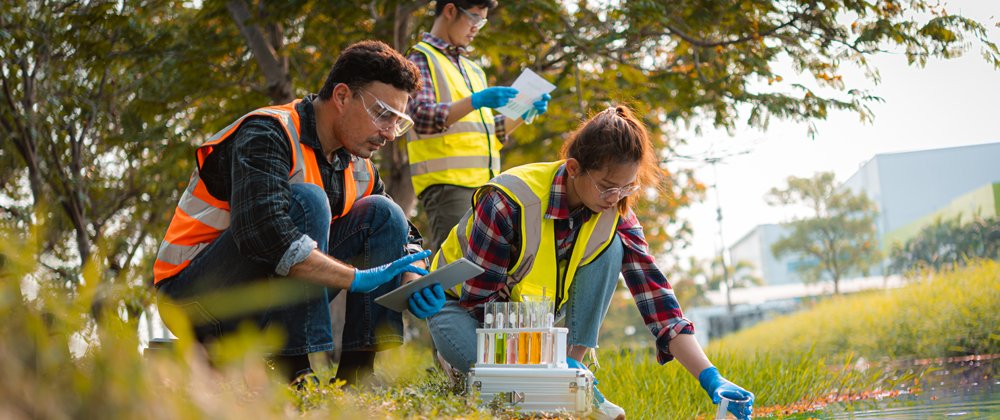
Environmental Science is no longer simply about pollution, conservation or climate change. It is an interdisciplinary science that brings together ecology, biology, chemistry, earth science, statistics, GIS and environmental data to understand how natural systems work — and how human activity is changing them.
But before choosing where to study it, it helps to understand that BSc in Environmental Science doesn't mean the same thing in every country.
Some programmes are heavily rooted in natural sciences and environmental research. Others combine science with sustainability, policy, technology or resource management. Choosing the right course therefore involves looking beyond the title and asking what kind of environmental professional the degree is preparing you to become.
Key Highlights
- Interdisciplinary by nature: Environmental Science can bring together ecology, chemistry, earth science, climate science, statistics and environmental systems.
- Science meets technology: GIS, remote sensing, environmental modelling and data analysis are increasingly important parts of the discipline.
- Practical learning matters: Fieldwork, laboratory work, environmental monitoring and research projects are common components of well-structured programmes.
- Course structures vary internationally: A degree called Environmental Science in one country may have a very different balance of science, sustainability, policy and management from one elsewhere.
- Professional pathways are less standardised: Unlike nursing or engineering, Environmental Science does not have one universal international registration system. The individual programme's scientific content, practical experience and professional accreditation can therefore matter considerably.
Environmental Science Around the World
No single country is automatically “best” for Environmental Science. The more useful question is which country's approach matches the kind of environmental career you want.
| Country | How the degree is typically structured | What a student should know |
|---|---|---|
| UK | BSc / BSc (Hons), usually 3 years; 4 years where a placement or study-abroad year is included | The UK has a relatively mature Environmental Science degree structure, with programmes combining ecology, environmental chemistry, earth science, GIS, climate and environmental assessment. Some degrees are accredited by the Institution of Environmental Sciences (IES), so accreditation can be worth checking at programme level rather than assuming it from the degree title. |
| Australia | Bachelor of Science / Bachelor of Environmental Science, generally 3 years; some universities offer a fourth Honours year | Australian programmes often reflect the country's distinctive environmental challenges: biodiversity, conservation, climate, water, natural resources and ecosystem management. At some universities, Environmental Science is a defined major within a BSc rather than a standalone degree, so the actual major structure matters. |
| Canada | BSc / Honours BSc, generally 4 years | Canadian programmes can be strongly interdisciplinary. Students may encounter biology, chemistry, geography, earth science and mathematics alongside conservation, resource management and environmental policy. Co-op is also available on some programmes, making work experience an important part of the comparison. |
| USA | BS / BSc-equivalent, typically 4 years | The US model gives students considerable room to specialise. Environmental Science may sit alongside Environmental Policy, Environmental Management or Environmental Studies, and programmes can develop into areas such as climate, conservation, soils, water or environmental data science. |
| Ireland | BA (Moderatorship) / BSc, typically 4 years | Ireland demonstrates why looking only for the letters “BSc” can be misleading. Trinity's Environmental Sciences degree is a 4-year BA (Moderatorship) despite being a multidisciplinary science programme, combining biological, chemical and physical environmental science with fieldwork, GIS, environmental impact assessment and a final research project. |
| Netherlands | BSc, generally 3 years | The Dutch approach can be particularly interdisciplinary. Wageningen's 3-year English-taught Environmental Sciences BSc explicitly combines natural, social and technological sciences, looking at environmental problems through both scientific and human dimensions. |
| Germany | BSc, generally 3 years | German programmes can have a stronger natural-science and research orientation, with combinations of biology, chemistry, physics, ecology, environmental monitoring and modelling. English-taught Bachelor's options exist, but they are less widespread than English-taught Master's programmes. |
| New Zealand | BSc / Bachelor of Environmental Science, generally 3 years; some specialist or Honours routes extend to 4 years | Environmental Science is closely connected to biodiversity, freshwater, conservation, agriculture, biosecurity and natural-resource management. Some programmes also have recognition through environmental professional bodies, making programme-level accreditation worth checking. |
| Albania | Bachelor-level environmental/natural science programmes | Albania is worth considering as a European Bachelor's option, but students should pay close attention to the exact degree title and curriculum. Environmental programmes may not use the same “BSc Environmental Science” terminology found in the UK or Australia. |
This difference in structure is important. For example, an English-taught Environmental Sciences Bachelor's in Germany can combine biology, chemistry, physics and ecology with data analysis, modelling and environmental monitoring. Meanwhile, Wageningen's Dutch programme deliberately brings natural, social and technological sciences together. These are both Environmental Science degrees, but they develop somewhat different academic perspectives.
The UK also illustrates why course-level accreditation can matter. Some Environmental Science degrees are accredited by the Institution of Environmental Sciences, providing a recognised professional-development framework alongside the academic qualification.
What Will You Study?
A science-focused Environmental Science degree may include:
- Ecology and Biodiversity
- Environmental Chemistry
- Earth and Geosciences
- Climate and Atmospheric Science
- Soil and Water Science
- Pollution and Environmental Toxicology
- Statistics and Scientific Data Analysis
- GIS and Remote Sensing
- Environmental Monitoring
- Environmental Policy and Management
- Fieldwork and Laboratory Methods
- Research Project or Dissertation
Some programmes allow students to specialise in areas such as climate change, conservation, natural resources, environmental data or water systems, while others maintain a broader interdisciplinary structure.
That makes the module list more important than the course title when comparing universities.
Where Can a BSc Environmental Science Lead?
Environmental Science can provide a foundation for several different career directions.
Environmental Consulting: Environmental assessment, compliance, monitoring and environmental risk.
Climate and Sustainability: Climate-related analysis, sustainability programmes, carbon management and environmental strategy.
Conservation and Natural Resources: Biodiversity, ecosystems, protected areas and natural-resource management.
Environmental Data and GIS:
Spatial analysis, remote sensing, environmental modelling and scientific data.
Government and Regulation: Environmental agencies, local authorities, policy and regulatory work.
Research and Further Study: Master's-level specialisations in areas such as climate science, conservation, environmental management, sustainability, ecology or environmental engineering.
If you want to investigate ecosystems, pollution, climate systems or environmental data, a science-heavy Environmental Science degree may be the stronger foundation.
If your interest is primarily corporate sustainability, environmental policy or management, an Environmental Management, Sustainability or related degree may be a closer fit.
Is This Course Right for You?
- Environmental Science can suit students who enjoy science but want to work across disciplines rather than specialise immediately in one.
- You should be comfortable with scientific analysis, statistics and potentially mathematics, alongside field and laboratory work.
It can be particularly relevant if you are interested in questions such as:
- How does climate change affect ecosystems?
- How do pollution and human activity alter air, water and soil?
- How can environmental data guide better decisions?
- How can natural resources be managed sustainably?
Worth Knowing Before You Choose
- Don't choose Environmental Science only because you care about the environment.
- Choose it because you are interested in understanding the science behind environmental problems.
- If you already know that your interest lies in climate modelling, conservation, GIS, water management or environmental data, look for a Bachelor's that gives you opportunities to develop that specialisation.
- And when comparing countries, don't just ask “Which is cheaper?” or “Which has better job opportunities?”
Ask:
What kind of Environmental Science will I actually study there?
That question can make a bigger difference to your eventual career direction than the course title itself.
Why It Matters for Kerala Students
Environmental challenges are particularly tangible in Kerala — from flooding and coastal change to water management, biodiversity, waste and climate-related risks.
But studying Environmental Science abroad can offer exposure to environmental systems and management approaches beyond Kerala's context.
For a student from Kerala, the international choice is therefore not simply about going abroad to study “the environment”. It can mean choosing between very different academic environments — from science-focused programmes in Germany to professionally structured Environmental Science degrees in the UK and interdisciplinary approaches in countries such as the Netherlands.
Frequently Asked Questions
Is BSc Environmental Science the same in every country?
No. The balance between natural science, sustainability, policy, technology and management varies considerably.
Is Environmental Science a science-heavy degree?
It can be. Many programmes include biology, chemistry, ecology, earth science, statistics and environmental data analysis. Always check the modules before applying.
Is Environmental Science the same as Environmental Studies?
Not necessarily. Environmental Science generally has a stronger natural-science and quantitative component, while Environmental Studies may place greater emphasis on society, policy and human-environment relationships. The distinction varies by university.
Can I work in climate change after Environmental Science?
Yes. A Bachelor's can provide a foundation for climate and sustainability careers, although specialised scientific, modelling or research positions may require postgraduate study.
Which country is best for Environmental Science?
There is no universal answer. The UK can be attractive for professionally structured Environmental Science degrees, Germany for science and research, the Netherlands for interdisciplinary environmental study, and Australia, Canada, the USA, Ireland and New Zealand for their own combinations of environmental science, ecosystems, resources and sustainability. Albania can also be considered when comparing European Bachelor's options.
Start Your Study Abroad Journey
Thinking about Environmental Science abroad? IRS Study Abroad can help you compare countries, course structures, specialisations and university requirements to find a programme that fits your academic interests and career direction.
📞 +91 96561 21000
📍 IRS Study Abroad, 3rd Floor, Vettiyil Endow, Opp Pvt Bus Stand, Nagampadom, Kottayam
🌐 Start Your Study Abroad Journey: https://join.irsstudyabroad.com/