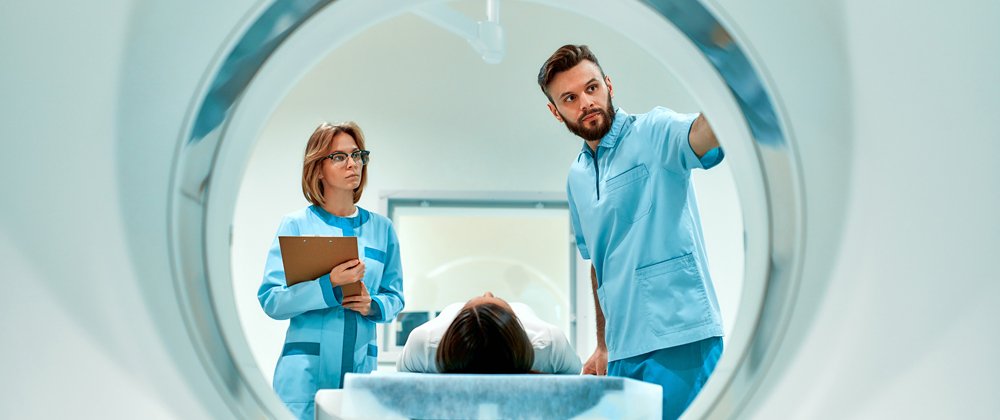
Diagnostic radiographers operate the imaging technology — X-ray, CT, MRI, ultrasound — that doctors rely on to diagnose illness and injury, working directly with patients while producing and interpreting the images that guide treatment decisions. This is a genuinely global, in-demand allied-health career, but the entry-level qualification isn't the same everywhere — in some countries it's a direct-entry Bachelor's; in others, a shorter diploma/associate route or an accelerated graduate-entry route also exists.
Key Highlights
- In the UK, Ireland, Australia, and Albania, a 3–4 year Bachelor's degree is a standard, direct-entry route to registration.
- In the US and Canada, both a Bachelor's and a shorter route exist side by side — a 2–3 year Associate degree or college diploma is the more commonly taken path to certification.
- Ireland also offers an accelerated 2-year Graduate Entry route (for those who already hold an honours degree in any discipline) alongside its standard 4-year Bachelor's — worth knowing if you're considering Ireland after already completing another degree.
- Clinical placement hours are mandatory and heavily weighted everywhere — UK and Irish programmes often run close to a 50/50 academic-to-clinical split; Australian programmes typically require around 1,400–2,500 hours of supervised clinical practice.
- International-student eligibility for UK programmes varies by university, not just by country — some UK universities restrict this course entirely to home-fee students due to NHS placement funding, while many others accept and place international students without issue. This must be checked university-by-university.
How Structure and Registration Vary by Country
| Country | Typical Qualification & Duration | Accreditation / Certifying Body | Registration Route |
| United Kingdom | BSc (Hons), 3 years (4 with placement/study abroad) | Society and College of Radiographers, validated by HCPC | HCPC registration required. Important: international-student eligibility varies by university — some (e.g., Cardiff) restrict this course to home-fee students due to NHS placement funding, while others (Leeds, Exeter, Salford, Birmingham City, Derby, among others) accept and place international students. Always confirm with IRS Study Abroad or the specific university. |
| Ireland | BSc (Hons), 4 years (direct entry); or an accelerated 2-year Graduate Entry route for those with an existing honours degree | CORU (Ireland's multi-profession health regulator) | CORU registration required to practise; both direct-entry and graduate-entry routes are CORU-approved (UCD, TCD, UCC) |
| Australia | Bachelor of Medical Radiation / Medical Imaging (Honours), 4 years | Accredited by the Professional Accreditation Board of the Australian Institute of Radiography (AIR) | Registration with the Medical Radiation Practice Board of Australia (MRPBA); clearly established, separate international-student pathways at most universities (Newcastle, Adelaide, QUT, Deakin, and others) |
| United States | Associate degree, 2 years (most common route); Bachelor's, 4 years (also available, not the minimum) | JRCERT-accredited programmes | ARRT certification exam; some states also require separate licensure |
| Canada | College diploma, 2–3 years, or a Bachelor's route | CAMRT (Canadian Association of Medical Radiation Technologists) | CAMRT certification exam (written + practical), plus provincial licensing in most provinces |
| Albania (e.g., Western Balkans University) | Bachelor in Imaging Technician, 3 years, 180 ECTS, taught in English | WBU's Faculty of Technical Medical Sciences; clinical training through partner hospitals (American Hospitals Group, International Hygeia Hospital) | An emerging, lower-cost destination worth considering alongside the more established markets above; confirm current international recognition/registration pathway back to India directly with the university |
This table reflects general national frameworks — always confirm the specific institution's accreditation, international-student eligibility, and clinical placement arrangements before enrolling.
Worth noting for cross-border mobility: Australian graduates holding an AIR Statement of Accreditation can generally work in New Zealand, the UK, and Canada without starting over, and a recent agreement allows Australian graduates to sit the US National Registry (ARRT) exam directly — making an Australian qualification one of the more globally portable starting points in this field.
What Will You Study?
- Anatomy, Physiology, and Radiographic Positioning
- Radiation Physics and Radiation Protection
- Imaging Modalities: X-ray, CT, MRI, Ultrasound, Fluoroscopy
- Patient Care and Communication
- Image Evaluation and Interpretation Fundamentals
- Extensive supervised clinical placement, working with real patients across hospital and imaging department settings
Where Can This Degree Take You?
Diagnostic Radiography – general hospital and clinic-based imaging work, the most common career path
CT, MRI, or Ultrasound Specialisation – many radiographers pursue further, often postgraduate, specialisation in a specific imaging modality
Nuclear Medicine or Radiation Therapy – closely related specialisations, sometimes offered as a distinct degree stream
Advanced Practice, Research, or Education – senior radiographers can move into reporting, teaching, or research roles with experience and further qualification
Healthcare Management – imaging department leadership roles with sufficient experience
Is This Course Right for You?
This course may be a good fit if you:
- Want direct patient contact combined with hands-on technical/scientific work.
- Are comfortable with a heavily placement-based training model — this is not a classroom-only degree.
- Are strong in Physics and Biology.
Worth deciding early:
- Whether you want a direct-entry Bachelor's (UK, Ireland, Australia, Albania) or the shorter Associate/diploma route common in the US and Canada.
- If already holding another degree, Ireland's 2-year Graduate Entry route may be faster than starting a fresh Bachelor's elsewhere.
- If considering the UK specifically, confirm the individual university's international-student and placement policy before applying.
Why It Matters for Kerala Students
Medical Imaging/Radiography completes the allied-health cluster alongside Nursing, Physiotherapy, and Medical Laboratory Science — fields where Kerala already has a strong domestic training base. It's a comparatively less-discussed pathway locally, which can mean less competition, but the real decision students need help with is choosing the right country, qualification level, and — in the UK's case — the right university, since eligibility itself can vary at that level. Albania's WBU offers a genuinely lower-cost, English-taught entry point worth comparing directly against the more established UK/Ireland/Australia routes.
Frequently Asked Questions
Is this always a Bachelor's degree?
No — it's genuinely different by country. It's Bachelor's-level in the UK, Ireland, Australia, and Albania, but the more common entry route in the US and Canada is a shorter Associate degree or college diploma, though Bachelor's programmes exist there too.
Can international students study Diagnostic Radiography in the UK?
It depends entirely on the university, not just the country. Some UK universities restrict this course to home-fee-status students because their NHS clinical placement funding doesn't extend to international students. Others accept and place international students without issue.
What if I already have another Bachelor's degree — is there a faster route?
Yes — Ireland offers an accelerated 2-year Graduate Entry route (UCD, TCD, UCC) for those who already hold an honours degree in any discipline, rather than starting a full 3–4 year Bachelor's from scratch.
Which country offers the most globally portable qualification?
Australia is a strong option — its accreditation body has established pathways for graduates to work in New Zealand, the UK, and Canada, and a recent agreement supports US registration too.
Is patient contact a big part of this role?
Yes — unlike Medical Laboratory Science, this is a direct patient-facing role, working one-on-one with patients throughout imaging procedures.
Start Your Study Abroad Journey
Considering a career in medical imaging or radiography abroad? Our counsellors can help you compare qualification levels, registration pathways, and university-specific eligibility across countries to find the right fit for your goals and budget.
📞 +91 96561 21000
📍 IRS Study Abroad, 3rd Floor, Vettiyil Endow, Opp Pvt Bus Stand, Nagampadom, Kottayam
🌐 Start Your Study Abroad Journey: https://join.irsstudyabroad.com/