Practical higher education on Ireland's Dublin–Belfast corridor
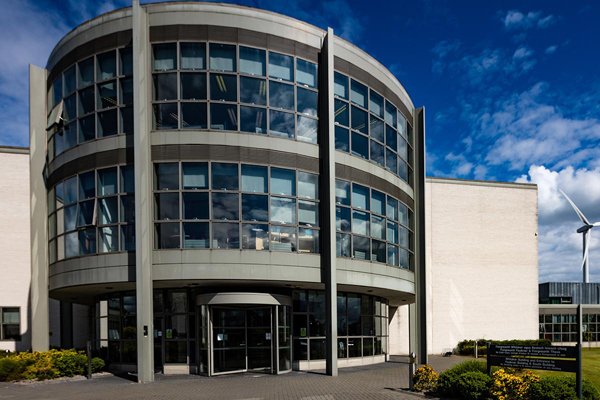
Dundalk Institute of Technology (DkIT) has a distinctive position in Irish higher education. Located midway between Dublin and Belfast, it serves a region that crosses both the Irish border and several major economic areas. DkIT describes itself as a centre for higher education, research, innovation and employer engagement on the Belfast–Dublin corridor.
For international students, that regional setting comes with a surprisingly broad academic choice. DkIT's current international portfolio covers computing, engineering, science, health, business, hospitality, creative subjects and sport, making it considerably broader than its name might suggest.
Why DkIT stands out
A strong emphasis on practical experience
Work placement is an important part of DkIT's approach. The institute has a dedicated Placement Office, and more than 900 students are placed each year across areas including business, humanities, creative media, health studies and applied sciences. Placements are structured, supervised and assessed rather than being an optional activity added to the degree.
This can be particularly relevant for students choosing applied subjects. For example, DkIT's Computing in Software Development programme includes a work-placement component, while its wider computing portfolio covers areas such as data science, AI, cybersecurity and software development.
More than just technology
Despite the word Technology in its name, DkIT has a wide subject mix.
International students can currently find programmes in:
- Computing: Data Science & AI, Software Development, Games Development and related areas
- Engineering: Mechanical, Electrical & Electronic and Civil Engineering
- Science and health: Biopharmaceutical Science, Pharmaceutical Science, Bioscience, Nutrition and Health
- Business: Business, Accounting & Finance, Digital Marketing and related areas
- Tourism and hospitality
- Creative media, film and performing arts
- Sport and physical activity
Career opportunities and student value
DkIT's location gives its employer engagement a strong regional dimension. The institute works with employers through placements, careers events and applied research, while students can gain experience in professional environments before graduation.
Research is also becoming a larger part of DkIT's profile, particularly in areas connected with technology and regional needs. Its current work includes computing, digital health, environmental research and cross-border innovation.
For students who want a practical degree without studying in the middle of a major capital city, Dundalk offers a different kind of Irish student experience. Dublin and Belfast remain within reach, while the campus itself is located in a smaller town.
DkIT and Queen's University Belfast: an important transition
DkIT is also entering an important new phase.
DkIT and Queen's University Belfast are progressing a strategic partnership that is intended to establish Dundalk University College, a College of Queen's University Belfast. Under the current proposal, DkIT would retain financial, staffing and governance autonomy while becoming part of a new university-college structure.
The change is not yet something students should treat as fully completed. It remains subject to the required legislative and regulatory processes. DkIT currently says that students entering in September 2026 can expect to graduate from Dundalk University College if the approvals and application process are completed, while new undergraduate honours and postgraduate taught entrants from September 2027 are anticipated to be eligible for Queen's awards under the proposed arrangement.
For a student considering DkIT now, therefore, the Queen's connection is worth understanding — but it should not be presented as though DkIT has already become a Queen's campus.
Why students from Kerala may consider DkIT
- DkIT can make sense for Kerala students who want an applied Irish education with opportunities for professional experience, particularly in computing, engineering, science, business and other career-oriented fields.
- The international course portfolio includes both bachelor's and master's options, while students who need additional academic or English preparation can also consider DkIT's International Foundation Programme.
- The location may also appeal to students who prefer a smaller city environment over Dublin while still wanting to study within the economically connected Dublin–Belfast corridor.
- For 2026/27, DkIT lists a €10,950 annual non-EU fee for its standard undergraduate degree category, plus a €125 facilities fee. Programme-specific fees can differ, so applicants should check the fee for their chosen course before applying.
Is DkIT right for you?
DkIT could be a good fit if you:
- Prefer practical and applied learning
- Want work-placement opportunities as part of your education
- Are considering computing, AI, engineering, science, business or other applied fields
- Prefer a smaller Irish location to central Dublin
- Like the idea of studying on the Dublin–Belfast economic corridor
DkIT is therefore best considered on the basis of course, practical experience, location and the evolving Queen's partnership, rather than simply by comparing its name with Ireland's largest universities.
Planning to study at DkIT?
Choosing the right DkIT programme means looking at more than the course title. Work-placement arrangements, entry requirements, international fees, location and the developing relationship with Queen's University Belfast can all matter to your decision.
IRS Study Abroad, Kottayam can help you assess DkIT's current programmes and eligibility and guide you through the application and study-abroad process.
📞 +91 96561 21000
📍 IRS Study Abroad, 3rd Floor, Vettiyil Endow, Opp Pvt Bus Stand, Nagampadom, Kottayam
🌐 Start Your Study Abroad Journey: https://join.irsstudyabroad.com/