
Radboud Unive y was founded in 1923 in Nijmegen, the Netherlands' oldest city, originally under the name Catholic University Nijmegen — it adopted its current name in 2004. Unlike our other Netherlands listings, which lean toward technology (Twente), business and economics (Erasmus), or applied, career-focused study (TIO), Radboud is a broad public research university, placing it among the top 1% of universities worldwide across independent rankings.
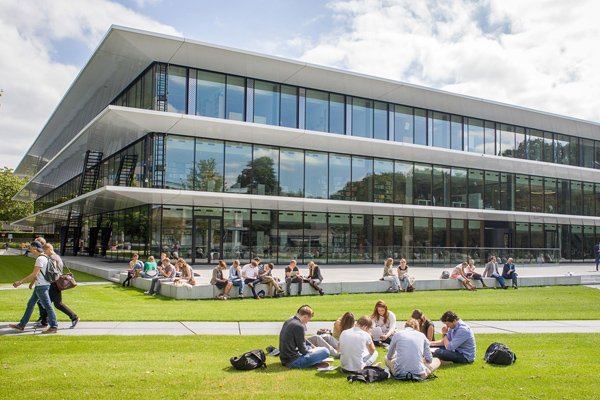
The university's entire campus — seven faculties and more than 20 research institutes — sits on a single green, modern site on the former Heyendael estate, a genuinely close-knit academic community rather than a scattered, building-by-building presence across the city.
Why Radboud Stands Out
Radboud's High Field Magnet Laboratory (HFML) is a genuine global centre for high-magnetic-field research, and the university's physics department has a real, documented Nobel connection: Andre Geim, who later won the 2010 Nobel Prize in Physics for his work on graphene, conducted part of his pioneering research at Radboud — a specific, verifiable link to Nobel-level physics work, not a general "strong sciences" claim. Radboud also maintains a deepening research partnership with the Max Planck Society, positioning Nijmegen as a leading international hub for research into the foundations of human language.
A few more specifics that set Radboud apart:
- Ranked in the 101–150 band globally in the 2025 Academic Ranking of World Universities (Shanghai Ranking), and #142 in US News's Best Global Universities — solidly inside the world's top 1%
- Named the second-best general university in the Netherlands for the fourth consecutive year by the Keuzegids Universiteiten 2025, a respected Dutch student-guide ranking based specifically on programme quality
- Home to one of Europe's leading multidisciplinary research schools in molecular life sciences, focused specifically on understanding disease mechanisms
- Seven of Radboud's Bachelor's programmes are rated as top-rated within their field, with five specifically rated best-in-field
- A genuinely personal academic model — students receive individual guidance from top researchers, with undergraduate, postgraduate, and doctoral study directly integrated into the university's ongoing research work rather than kept separate from it
Popular Courses
Radboud offers 13 Bachelor's and 37 Master's programmes taught in English across seven faculties:
- Molecular Life Sciences and Medicine — through Radboudumc, one of the Netherlands' leading academic medical centres, and Radboud's research strength in disease-mechanism research
- Physics and Natural Sciences — including access to the High Field Magnet Laboratory's globally unique research infrastructure
- Language and Linguistics — reflecting Radboud's Max Planck Society partnership and its position as a hub for language-foundations research
- Law, Philosophy, Theology and Religious Studies — reflecting the university's original founding identity
- Social Sciences, Management, and Business Administration
Radboud also runs one of the largest summer schools in the Netherlands, offering more than 50 intensive academic courses at Bachelor's, Master's, and PhD level, with over 600 participants from 75 countries — a genuine option for students who want a shorter, focused academic experience before committing to a full degree.
Career Opportunities & Student Value
Radboud's research-integrated teaching model means students at every level — undergraduate through doctoral — work directly alongside academics engaged in active, often internationally significant research, rather than encountering research only as a distant institutional statistic. The university's strength in molecular life sciences and its connection to Radboudumc give health sciences and medicine students genuine pathways into applied clinical and laboratory research during their studies.
Beyond specific subject strengths, Radboud's support services extend meaningfully beyond the classroom — dedicated career offices, sports facilities among the best in the country, and a Green Office where students can participate directly in sustainability initiatives on campus.
Why Students from Kerala Are Looking at Radboud
For Kerala students who want a genuine, broad public research university — rather than a technology-focused, business-focused, or applied-sciences institution — Radboud offers real global academic standing (top 1% worldwide) combined with specific, documented research strength in physics, molecular life sciences, and language studies. Its relatively low proportion of international students (around 10%) compared to some larger Dutch universities means a genuinely immersive academic environment, worth weighing depending on whether a student prefers a larger international cohort or a closer-knit campus community.
Nijmegen's status as the Netherlands' oldest city also gives students a distinctive cultural and historical setting, alongside the Netherlands' broader advantage of high English proficiency and relatively affordable tuition compared to UK, US, or Australian universities.
Is Radboud Right for You?
Radboud could be a strong fit if:
- you want a broad, top 1% global research university rather than a subject-specific technical or business institution
- you're specifically interested in Molecular Life Sciences, Medicine, Physics, or Language Studies
- you'd value close, direct integration between your coursework and active university research
- you're drawn to a genuinely close-knit, single-campus academic community over a larger, more dispersed university
- you're interested in trying Radboud's summer school programmes before committing to a full degree
Interested in Studying at Radboud University?
IRS Study Abroad can walk you through Radboud's admissions process, current tuition and scholarship details, and the Netherlands student visa process from start to finish.
📞 +91 96561 21000
📍 IRS Study Abroad, 3rd Floor, Vettiyil Endow, Opp Pvt Bus Stand, Nagampadom, Kottayam
🌐 Start Your Study Abroad Journey: https://join.irsstudyabroad.com/