
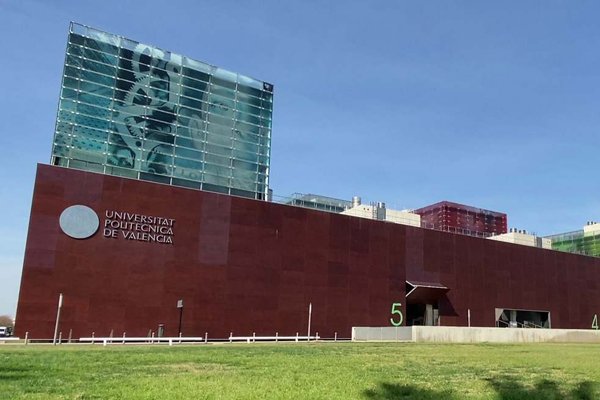
The Universitat Politècnica de València began in 1968 as the Instituto Politécnico Superior de Valencia, created by decree with four founding schools: Agricultural Engineering, Architecture, Civil Engineering, and Industrial Engineering. In 1971 it became a full university, one of three polytechnic universities established by the Spanish state on the same day, alongside those in Barcelona and Madrid. The university celebrated its 50th anniversary in 2018-19, though some of its founding schools have roots going back more than a century.
UPV is a public university with its main Vera campus in Valencia and two further campuses in Alcoy and Gandia. It teaches around 28,000 students according to its own figures (QS lists a higher total of roughly 32,000), including more than 5,000 international students, across 47 bachelor's and 94 master's programmes.
Why UPV Stands Out
UPV is a public technical university, so tuition is set by the Valencian government rather than by a private business model. Published tuition starts from roughly €2,700 a year, far below the fees at private Spanish business and design schools, and a fraction of comparable engineering degrees in the UK, Australia, or Canada. For families comparing the total cost of a technical degree in Europe, this is the clearest differentiator on this page.
A few more specifics that set UPV apart:
- Ranked #=434 in the QS World University Rankings 2027, and #=225 in the QS Sustainability Ranking
- Founded around engineering, architecture and agriculture, with later additions in Fine Arts (1970s), Computer Science (1980s), and Telecommunications (1989) — a technical focus rather than a general-purpose catalogue
- Roughly 17% of students come from abroad, with postgraduate programmes drawing a majority of the international intake
- Valencia is Spain's third-largest city, on the Mediterranean coast, with a lower cost of living than Madrid or Barcelona
- International applicants have a dedicated admission route ("Phase 0") that opens months ahead of the domestic rounds, which helps with visa and scholarship timing
Popular Programmes
UPV's strengths follow its founding schools:
- Engineering — industrial, civil, agricultural, telecommunications, and aerospace disciplines
- Computer Science and Data-related degrees
- Architecture and Building Engineering
- Fine Arts and Design
- Master's programmes in technical and management fields
The language of instruction is the main thing to check. Most UPV master's programmes are taught in Spanish, some in Valencian, and only some in English, and the university's own admissions page does not list which programmes are fully English-taught, so each programme page has to be checked individually. Applicants for Spanish-taught courses will need documented Spanish proficiency. For Kerala students, this makes UPV a strong fit only where an English-taught programme exists in the chosen field, or where the student is willing to study in Spanish.
International applicants pay about twice the rate charged to Spanish and EU students, quoted by UPV at roughly €25–70 per ECTS credit depending on the programme, payable in one, two, or eight interest-free instalments. There is also a one-time equivalence study fee (€155 in 2024-25) for applicants whose foreign degree has not yet been homologated in Spain. These figures should be confirmed with UPV or with us before budgeting, as they are revised annually.
Career Opportunities & Student Value
UPV's graduates move into Spain's engineering, construction, technology, and design sectors, and the university's technical identity means programmes are built around applied problem-solving. Valencia's port, logistics, automotive supply and architecture industries give engineering graduates a local job market, and Spain's post-study options allow international graduates to seek work after completing a degree.
The low public-sector fee level also changes the financial calculation: a two-year master's here can cost a small fraction of an equivalent programme in a country with private-style tuition, even after the international rate is applied.
Why Students from Kerala Are Looking at UPV
For Kerala students, UPV's appeal is cost and technical depth. A public European engineering or architecture degree at this fee level is hard to find elsewhere, and Valencia is a more affordable city than Madrid, Barcelona, or most Western European capitals.
The trade-off is language and process. Because many programmes run in Spanish, families should treat UPV as a programme-specific choice: strong for students who find an English-taught master's in their field, or who plan to learn Spanish, and a poorer fit for those who need a fully English environment across every programme. The application also runs through UPV's own pre-registration system with document legalisation requirements, so starting early (the Phase 0 window opens around November) matters.
Is UPV Right for You?
UPV could be a strong fit if:
- you're targeting an engineering, architecture, computing, or design degree at public-university prices
- you've found an English-taught programme in your field, or you're willing to study in Spanish
- total cost matters more to you than a private-school brand name
- you can start the application early, ahead of the visa and document-legalisation steps
- you'd like to live in a large, affordable Mediterranean city rather than Madrid or Barcelona
Interested in Studying at UPV?
IRS Study Abroad, Kottayam can help you identify which UPV programmes are taught in English, check eligibility and document requirements, and guide you through pre-registration and the Spain student visa process.
📞 +91 96561 21000
📍 IRS Study Abroad, 3rd Floor, Vettiyil Endow, Opp. Pvt Bus Stand, Nagampadom, Kottayam
🌐 Start Your Study Abroad Journey: https://join.irsstudyabroad.com/