
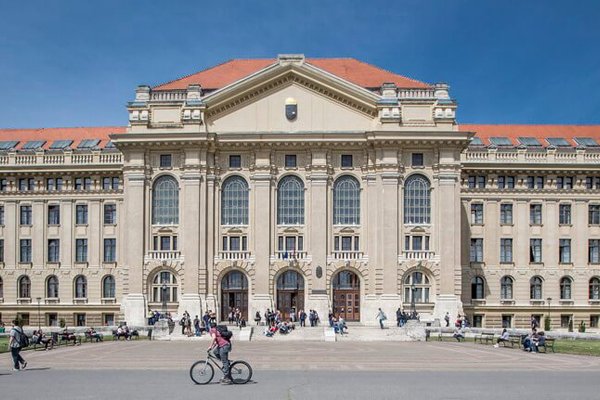
The University of Debrecen traces its roots to 1538, when it began as the Calvinist College of Debrecen — making it the oldest continuously operating institution of higher education in Hungary, a distinction it has held for nearly 500 years without interruption. It was formally reorganised into its current university structure in 1912, and in 2000, its previously separate faculties — theology, medicine, arts, and sciences — were unified under one university umbrella for the first time.
Debrecen, Hungary's second-largest city and eastern cultural hub, hosts the university across seven campuses spanning more than 150,000 square metres. Today, more than 27,000–30,000 students study here, including 5,000–7,000 international students from nearly 120 countries — making it one of Hungary's five officially recognised elite research universities, and distinct in profile from our other Hungary listing, the University of Pécs.
Why Debrecen Stands Out
Its medical faculty has taught in English since 1886 — one of the earliest English-medium medical programmes in continental Europe, decades before most universities in the region offered any English-taught instruction at all. That long institutional history is part of why Debrecen's medical degree is internationally recognised well beyond the European Economic Area, valid for practice pathways in numerous countries.
A few more specifics that set Debrecen apart:
- QS ranks Debrecen specifically in its subject lists for Medicine, Biological Sciences, and Agriculture & Forestry, alongside a broader Life Sciences and Medicine ranking — genuine subject-level recognition, not a general institutional claim
- The University Library holds national library status in Hungary, housing more than six million books — one of the largest academic libraries in the country
- Five former Debrecen students have gone on to win technical Academy Awards (Oscars), a genuinely unusual distinction for a Central European university with a medicine-and-sciences-first reputation
- Operates an associated Basic Medicine campus in Geochang County, South Korea — a real, functioning international academic partnership, not just a study-abroad agreement
- Ranked among the Times Higher Education's top 200 universities in Europe for Teaching specifically
Popular Courses
Debrecen's 14 faculties offer more than 80 English-taught programmes, with genuine strength across several distinct fields:
- Medicine (MD) — 6 years, Debrecen's founding academic strength and its most internationally recognised programme
- Dentistry — 5 years
- Pharmacy — 5 years
- Nursing and Physiotherapy — 4 years each
- Engineering, Agricultural and Food Sciences — a genuine secondary strength alongside medicine, distinct from Pécs's broader multi-faculty spread
- Business, Computing, and Humanities
International undergraduate admission generally involves an entrance exam (with a separate exam fee around $350, alongside a $150 application fee) in addition to academic transcripts. Reported acceptance rates run around 65%, though this varies meaningfully by programme, with Medicine and Dentistry considerably more selective than the university average.
Career Opportunities & Student Value
Debrecen's medical faculty maintains direct collaboration with teaching hospitals, giving students real clinical exposure alongside coursework rather than purely classroom-based training — a genuine advantage for students specifically pursuing Medicine, Dentistry, or Physiotherapy. The university's degrees carry recognised standing for professional practice pathways well beyond Hungary and the EU, which matters directly for Kerala students planning to practise internationally after graduating.
Beyond healthcare, Debrecen's Engineering and Agricultural and Food Sciences faculties give students research-active pathways in fields with growing global demand, backed by the university's status as one of Hungary's five elite research institutions.
Why Students from Kerala Are Looking at Debrecen
For Kerala students specifically pursuing Medicine, Dentistry, or Pharmacy in Europe, Debrecen offers a genuinely different profile from Pécs: an English-medical-teaching history stretching back to 1886, a broader research-university identity across 14 faculties, and specific QS subject rankings in Medicine and Life Sciences rather than a general "strong in healthcare" claim. Hungary's lower cost of living compared to Western Europe remains a shared advantage across both our Hungary listings — private flats in Debrecen typically run around $340 a month, a meaningful saving compared to Western European study destinations.
Students should treat Medicine and Dentistry admission as genuinely competitive despite the university's overall 65% acceptance rate, since entrance exam performance specifically determines access to these higher-demand programmes.
Is Debrecen Right for You?
Debrecen could be a strong fit if:
- you're specifically pursuing Medicine, Dentistry, Pharmacy, or Physiotherapy, and want a university with nearly 140 years of English-medium medical teaching history
- you want the credibility of studying at one of Hungary's five officially recognised elite research universities
- you're drawn to genuine research strength in Agricultural and Food Sciences or Engineering alongside medicine
- affordability matters, with Debrecen's cost of living meaningfully lower than Western Europe
- you'd value a large, established international student community — nearly 120 countries represented on campus
Interested in Studying at the University of Debrecen?
IRS Study Abroad can walk you through Debrecen's entrance exam process, current tuition and scholarship details, and the Hungary student visa process from start to finish.
📞 +91 96561 21000
📍 IRS Study Abroad, 3rd Floor, Vettiyil Endow, Opp Pvt Bus Stand, Nagampadom, Kottayam
🌐 Start Your Study Abroad Journey: https://join.irsstudyabroad.com/