South Korea
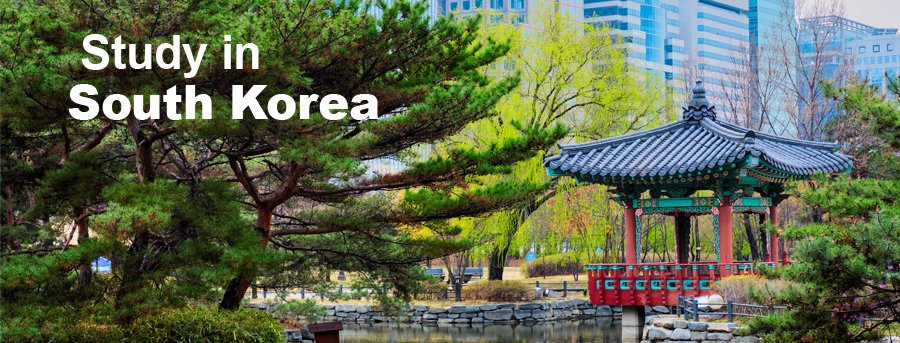
South Korea has moved from a niche choice to one of Asia's fastest-growing study destinations, and the growth is recent enough to be worth stating with real numbers rather than a vague "increasingly popular" line: the Korean government's own target of 300,000 international students by 2027 was already surpassed roughly two years early, with official figures putting the country past 314,000 international students in early 2026. Through IRS Study Abroad, Kerala students get an accessible route into this system — English-medium programmes, structured support, and admission that doesn't require competing at the level of Korea's most selective national universities.
Why Consider South Korea?
- English-taught programmes and foundation pathways designed specifically for international students, with realistic admission requirements rather than hyper-competitive entry.
- The Global Korea Scholarship (GKS), funded by the Korean government, can cover full tuition, a monthly living allowance, flights, and a year of Korean language training for eligible students — one of the more substantial scholarship programmes available to Indian students anywhere, and separate from university-specific admission.
- A rapidly expanding student population means universities and cities have invested seriously in international student support infrastructure rather than treating it as an afterthought.
- A genuine range of specialisations across our partner institutions — from technical and science-focused study to culinary arts — rather than a one-size-fits-all course list.
- Direct pathways from degree to employment in technology, manufacturing, and business, in an economy built around companies with genuine global reach.
What to Know Before You Apply
We'd rather set accurate expectations now than have them surface later in the process:
- Korean ability still matters, even in English-taught programmes. Coursework may be in English, but daily life, part-time work, and many campus interactions lean on at least conversational Korean. Students who invest early in basic Korean tend to adjust faster.
- Part-time work is more tightly regulated than in most European destinations. International students generally need separate permission from immigration authorities to work part-time, and this permission is often tied to a minimum level of Korean proficiency (TOPIK) and capped weekly hours. This is worth planning around rather than assuming it works the way it does in the UK or Ireland.
- TOPIK (Test of Proficiency in Korean) is required for Korean-taught courses, and can also affect eligibility for part-time work and some scholarships, even if your degree itself is in English.
Our Partner Universities in South Korea
- Woosong University, Daejeon
- Kyungdong University, Goseong
- Catholic Kwandong University
- Korean Bible University
- Kangwon National University
- Namseoul University
- Daeshin University
- Daegu University
- Kyongbuk Science University
- Le Cordon Bleu-Sookmyung Academy, Seoul
This is a genuinely varied list — regional and national universities, two faith-affiliated institutions, a science and technical college, and a specialist culinary academy — so the right fit depends heavily on what you want to study, not just "which Korean university has the best name recognition." We'll help you match your course goals to the right one on this list rather than starting from a ranking table.
Quick Facts About South Korea
Capital: Seoul
Official Language: Korean (English is the medium of instruction for a growing number of degree programmes at major universities)
Currency: South Korean Won (₩)
Main Intakes: Spring (March) and Fall (September)
Popular Student Cities: Seoul, Busan, Daegu, Incheon
Known For: Technology and engineering, business, globally ranked research universities, and one of the world's most generous international scholarship programmes (GKS)
Cost of Education
Tuition in South Korea varies by institution type and programme, and — as with every country page here — treat the ranges below as an orientation point, not a quote, and confirm the exact figure with the specific university before applying:
- National/public universities: commonly in the range of roughly ₩2,000,000–5,000,000 per semester (approximately $1,500–3,700).
- Private universities: generally higher, roughly ₩4,000,000–8,000,000 per semester (approximately $3,000–6,000), with engineering and medicine programmes typically toward the top of that range.
- GKS scholarship recipients: tuition is covered in full for the duration of the scholarship, alongside a monthly living stipend.
Cost of Living
Living costs depend heavily on the city:
- Seoul runs higher than other Korean cities, with students typically budgeting somewhere around $800–1,400 per month for accommodation, food, and daily expenses.
- Busan, Daegu, and other cities outside Seoul are noticeably more affordable, often 20–30% lower.
- On-campus and university-affiliated dormitories are common and usually the most cost-effective housing option, though availability varies by university and should be checked early.
Student Life
South Korea's cities are built around exactly the things that draw a lot of Indian students there in the first place — genuinely fast, reliable infrastructure, a food culture worth exploring beyond the K-drama version of it, and a youth culture (K-pop, K-drama, gaming, design) that's already familiar to many applicants before they arrive. That familiarity is a real advantage: students often adjust to daily life faster in a country whose pop culture they already follow than in one they're encountering for the first time.
Future Prospects
South Korea's economy is built around large, globally competitive companies in electronics, automotive manufacturing, shipbuilding, and technology, alongside a fast-growing startup and gaming sector. For students in engineering, computer science, and business specifically, that translates into genuine internship and early-career pathways — though, as with most non-English-speaking countries, longer-term employment prospects improve considerably with working Korean proficiency, which is worth factoring into a multi-year plan rather than treating as optional.
Who South Korea Suits
- Students who want an English-medium degree from a recognised Korean university with realistic, achievable admission requirements — not a place-only-the-top-scorers-get-in destination.
- Students interested in a specific specialisation matched to one of our partner institutions — for example, culinary arts through Le Cordon Bleu-Sookmyung, or technical/science-focused study through Kyongbuk Science University.
- Strong students who can realistically compete for the GKS scholarship, which significantly changes the cost equation and is applied for separately from university admission.
- Students genuinely interested in Korean language and culture, since some Korean-language investment — even in an English-taught programme — meaningfully improves the day-to-day experience.
- Students comfortable with a more structured, immigration-regulated approach to part-time work than they might expect from a European destination.
- Students from Punjab or Haryana should note that Woosong University does not currently accept applicants from these states — we'll guide you to a suitable alternative from the list above if this applies to you.
Frequently Asked Questions
Can I study in South Korea in English?
Yes, at all major universities, though the number and range of English-taught programmes still varies by institution and subject. Korean-taught courses require TOPIK certification.
Is the GKS scholarship realistic for Indian students?
It's competitive, but genuinely open to Indian applicants and one of the more generous scholarships available globally — covering tuition, a living allowance, flights, and language training for eligible recipients. It's worth applying for even if you don't secure it, since the university-track application process is a normal admissions route in itself.
Can I work part-time as a student in South Korea?
Generally yes, but it requires separate permission from Korean immigration authorities, is usually tied to a minimum TOPIK level, and comes with capped weekly hours. This is more regulated than part-time work rules in most European study destinations.
Do I need to know Korean if my programme is in English?
Not for your coursework, but for daily life, part-time work eligibility, and many practical interactions outside campus, at least basic Korean makes a real difference.
Is a South Korean degree recognised internationally?
Yes. Degrees from accredited Korean universities, particularly the globally ranked institutions, are recognised internationally and carry real academic weight, not just regional recognition.
Universities in South Korea
Read More

Read More